Brewed Regret: How I Lost Money Trusting Tea Hype
Ever chased a “safe” investment that smelled more like desperation than profit? I did. I jumped into tea investing—rare pu-erh, aged leaves, the whole trend—thinking it was like vintage wine or gold. Spoiler: it’s not. What looked like a quiet path to passive income turned into a lesson in emotional spending and market illusion. This isn’t about returns. It’s about why believing in magic, even in a teacup, can cost you real money. Behind the romantic imagery of ancient tea trees and hand-pressed cakes lies a murky, unregulated market where sentiment often outweighs substance. I learned the hard way that not every tradition translates into financial gain—and that the most dangerous investments are the ones that feel meaningful.
The Allure of the Leaves: Why Tea Sounds Like a Smart Bet
Tea investing appeals to something deep within us—the desire to own something real, something rooted in nature and culture. Unlike stocks that flicker on a screen or currencies that shift with geopolitical winds, tea feels tangible. You can hold a compressed cake of pu-erh in your hands, smell its earthy aroma, and imagine it aging gracefully like a fine Bordeaux. Marketers have seized on this emotional resonance, positioning rare aged tea as “edible gold” or “liquid heritage.” They point to isolated auction sales—$20,000 for a single cake—spun into headlines that suggest widespread appreciation. The narrative is seductive: buy now, store carefully, sell later at a premium. But this story ignores the broader reality.
The comparison to wine or art is misleading. Fine wine has established grading systems, trusted auction houses, and decades of price tracking. Art investing, while subjective, operates within a network of galleries, appraisers, and collectors who follow market trends. Tea, by contrast, lacks all of these safeguards. There is no global pricing index, no independent verification body, and no standardized way to assess quality across batches. What one expert calls “exceptional vintage,” another might dismiss as over-fermented and dull. The value is not only subjective but often manipulated. Sellers use poetic language—“harvested under the full moon,” “from a 300-year-old tree”—to justify high prices, even when documentation is absent.
Moreover, the idea that scarcity guarantees value is flawed. True scarcity requires both limited supply and sustained demand. While certain tea harvests are indeed small, demand remains niche and fragmented. Most buyers are hobbyists, not institutional investors. There is no pension fund allocating capital to aged pu-erh. Without broad market participation, price appreciation is speculative at best. When investors treat tea like a financial asset, they overlook its primary function: it is meant to be consumed. A tea cake locked away for 20 years isn’t generating income—it’s deteriorating, incurring costs, and relying entirely on the hope that someone, someday, will pay more for it than you did.
The Hidden Rot Beneath: Where Tea Investing Falls Apart
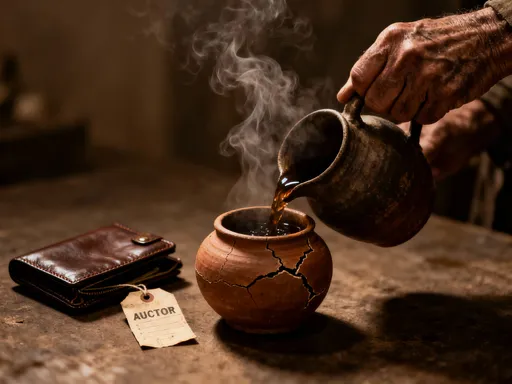
Beneath the elegant packaging and romantic storytelling lies a fundamental truth: tea is organic matter. It breathes, absorbs, and degrades. Unlike gold bars or real estate deeds, tea is vulnerable to environmental conditions. Humidity, light, temperature fluctuations, and nearby odors can all compromise its quality. A cake stored in a basement with seasonal dampness may develop mold. One kept near a kitchen may absorb cooking smells, altering its flavor profile. Even slight changes can erase years of “aging” benefits, turning a prized possession into something unsellable.
Proper storage isn’t passive—it’s an active, ongoing responsibility. Ideal conditions require climate-controlled spaces with stable temperatures between 68–77°F (20–25°C), humidity levels below 70%, and no exposure to strong odors. Many investors assume they can store tea in a closet or on a shelf, unaware of the risks. But without proper monitoring, the investment quietly erodes. Unlike a stock portfolio, where value is visible through daily pricing, tea’s deterioration is invisible until it’s too late. You won’t know your tea has degraded until you open the wrapper—often years after purchase.
Authentication is another major weakness. The tea market, especially for aged pu-erh, is rife with counterfeits. Because tea can be artificially aged through accelerated fermentation or stored in controlled environments to mimic natural aging, it’s difficult for even experienced buyers to distinguish genuine vintage from clever fakes. Labels can be forged, dates falsified, and origins misrepresented. There is no blockchain ledger, no certificate of authenticity widely accepted across the market. Buyers rely on trust—often misplaced trust—in sellers or middlemen. When resale time comes, proving provenance becomes nearly impossible, leaving investors vulnerable to steep markdowns or outright rejection by buyers.
Chasing Scarcity, Missing Substance: The Myth of “Rare” Tea
Scarcity is a powerful psychological trigger. The idea that something is rare—available to only a few—fuels desire and inflates perceived value. In the tea world, terms like “limited harvest,” “single-tree picking,” or “village-exclusive batch” are used liberally to justify premium pricing. But how much of this scarcity is real, and how much is manufactured? The truth is, many so-called rare teas are produced in quantities far larger than advertised. Some vendors use vague terminology to create an illusion of exclusivity, knowing that emotional buyers won’t demand proof.
Market dynamics further distort perception. A single high-profile auction—say, a $10,000 sale for a 30-year-old cake—gets amplified across social media, creating the impression of rising value. But such sales are outliers, not indicators of market trends. They often involve celebrity collectors, promotional stunts, or circular trading among insiders. The broader market may not support those prices at all. When the hype dies down, liquidity dries up, and sellers find themselves holding inventory with no buyers at anywhere near their purchase price.
Real scarcity requires three elements: verifiable limited supply, documented provenance, and sustained buyer interest. Most tea investments fail on all three counts. Without batch numbers, harvest records, or third-party verification, there’s no way to confirm rarity. And without a deep, active market, demand remains fickle. Investors who buy based on scarcity claims often discover too late that “rare” doesn’t mean “valuable.” It just means harder to sell. The danger lies in mistaking marketing language for market reality. Just because a tea is hard to find doesn’t mean it’s a good investment. It might just be hard to offload.
Emotion Over Evidence: How Nostalgia Clouds Financial Sense
Tea is more than a beverage—it’s tied to memory, ritual, and identity. For many, it evokes childhood mornings, family gatherings, or moments of quiet reflection. These emotional connections make tea investing uniquely vulnerable to cognitive bias. People don’t buy aged pu-erh because of yield curves or risk-adjusted returns. They buy because it feels meaningful. “This tea was harvested in the year my son was born.” “My grandmother drank this blend.” These narratives are powerful, but they don’t create market value.
When sentiment drives investment, objectivity fades. Buyers justify high prices not with data, but with stories. They overlook red flags—lack of documentation, unclear sourcing, inflated claims—because the purchase feels like a tribute, not a transaction. This emotional attachment also prevents rational decision-making later. Even when market signals suggest selling, investors hesitate. Letting go feels like betrayal. They hold on, hoping that personal significance will eventually translate into financial gain. But markets don’t trade in nostalgia. They trade in supply, demand, and verifiable quality.
The cost of this emotional entanglement is real. Storage expenses accumulate. Quality degrades. Opportunities to reinvest in more liquid, transparent assets are missed. Over time, the initial purchase price becomes a psychological anchor—“I paid $500 for this, so it must be worth at least that.” But value isn’t determined by what you paid; it’s determined by what someone else is willing to pay. When the resale offers come in at $100 or less, the gap between emotional value and market value becomes painfully clear. The lesson? Passion is wonderful—but it shouldn’t fund your portfolio.
The Storage Trap: What You Didn’t Budget For
One of the most underestimated aspects of tea investing is the cost of ownership. Unlike financial assets that require no physical upkeep, tea demands continuous care. And that care isn’t free. To preserve quality, investors need dedicated storage space—ideally climate-controlled, odor-free, and secure. Some build special cabinets with humidity regulators. Others pay for professional storage services, which can cost hundreds of dollars per year. These are not one-time expenses; they recur indefinitely, chipping away at any potential return.
Consider the scenario: you buy a tea cake for $300. Sounds reasonable. But over 10 years, you spend $150 on dehumidifiers, $80 on air filters, $200 on storage upgrades, and countless hours monitoring conditions. Suddenly, your $300 investment has a total cost of $730—before taxes, before resale fees, before any loss in quality. And if the tea degrades due to a power outage or accidental exposure, the entire sum is lost. There’s no insurance policy for spoiled tea. No FDIC backing. No recourse.
Worse, these costs are invisible during the purchase decision. Vendors don’t disclose storage requirements. Marketing materials don’t include long-term upkeep estimates. Buyers focus on the upfront price, not the lifetime cost of ownership. This creates a false sense of affordability. What seems like a modest investment becomes a slow financial drain. And because the asset’s value isn’t marked-to-market, investors remain unaware of losses until they attempt to sell. By then, it’s too late. The storage trap isn’t just about physical space—it’s about the hidden financial burden of maintaining an illiquid, perishable asset that may never appreciate.
Selling Is the Hardest Brew: Liquidity Myths in Tea Markets
Liquidity—the ability to convert an asset into cash quickly and at a fair price—is a cornerstone of sound investing. Stocks, bonds, and even real estate have established markets with price transparency and active buyers. Tea has none of that. The secondary market is fragmented, opaque, and highly inefficient. There are no exchanges, no bid-ask spreads, no real-time pricing. If you want to sell, you must navigate private networks, online forums, or auctions—each with its own risks and limitations.
Auctions, often cited as proof of value, are particularly misleading. Winning bids don’t reflect broad market demand; they reflect the highest bidder in a specific moment, often influenced by ego, competition, or promotional intent. A $5,000 auction price doesn’t mean your similar tea is worth that much. It might mean one person, for one reason, was willing to pay it. When you list your tea, you may receive offers 70% lower. And even then, the sale isn’t guaranteed. Buyers can back out. Payments can be delayed. Authenticity disputes can arise.
Private sales are no better. Without a centralized marketplace, buyers are scarce. You might wait months—or years—to find a serious offer. Negotiations are slow, trust is hard to establish, and pricing is arbitrary. Many investors discover that their purchase price was the peak, driven by temporary hype rather than sustainable value. When the market cools, resale becomes a fire sale. The lack of liquidity means you can’t exit when you want to. You’re stuck, watching your investment lose value while paying to store it. In financial terms, tea is not an asset—it’s a liability in disguise.
A Better Way: Principles That Actually Protect Your Money
So what should you do? The answer isn’t to abandon passion—but to separate it from portfolio strategy. If you love tea, buy it to enjoy, not to “invest.” Savor the ritual, the flavor, the moment. But don’t count on it to grow your wealth. True financial security comes from principles that have stood the test of time: diversification, liquidity, transparency, and cost control.
Instead of chasing trends wrapped in tradition, focus on assets with clear valuation methods and active markets. Index funds, bonds, real estate investment trusts (REITs), and dividend-paying stocks offer predictable returns, professional management, and low holding costs. These instruments may lack the romance of aged pu-erh, but they deliver what tea cannot: reliability. They allow you to sleep at night, knowing your wealth is protected by regulation, transparency, and scale.
If you do choose to buy tea for collection, treat it as a hobby expense, not an investment. Set a strict budget—money you’re willing to lose. Avoid high-priced “rare” batches unless you have expert verification. Prioritize enjoyment over speculation. And never let a single purchase compromise your financial foundation. The goal isn’t to find hidden treasure; it’s to avoid preventable losses.
Ultimately, the story of tea investing is a cautionary tale about the dangers of emotional decision-making. It reminds us that not every asset that feels valuable is financially sound. The most enduring investments aren’t the ones that stir the heart—they’re the ones that protect the future. Let passion enrich your life, but let discipline manage your money. That’s the true recipe for lasting financial well-being.